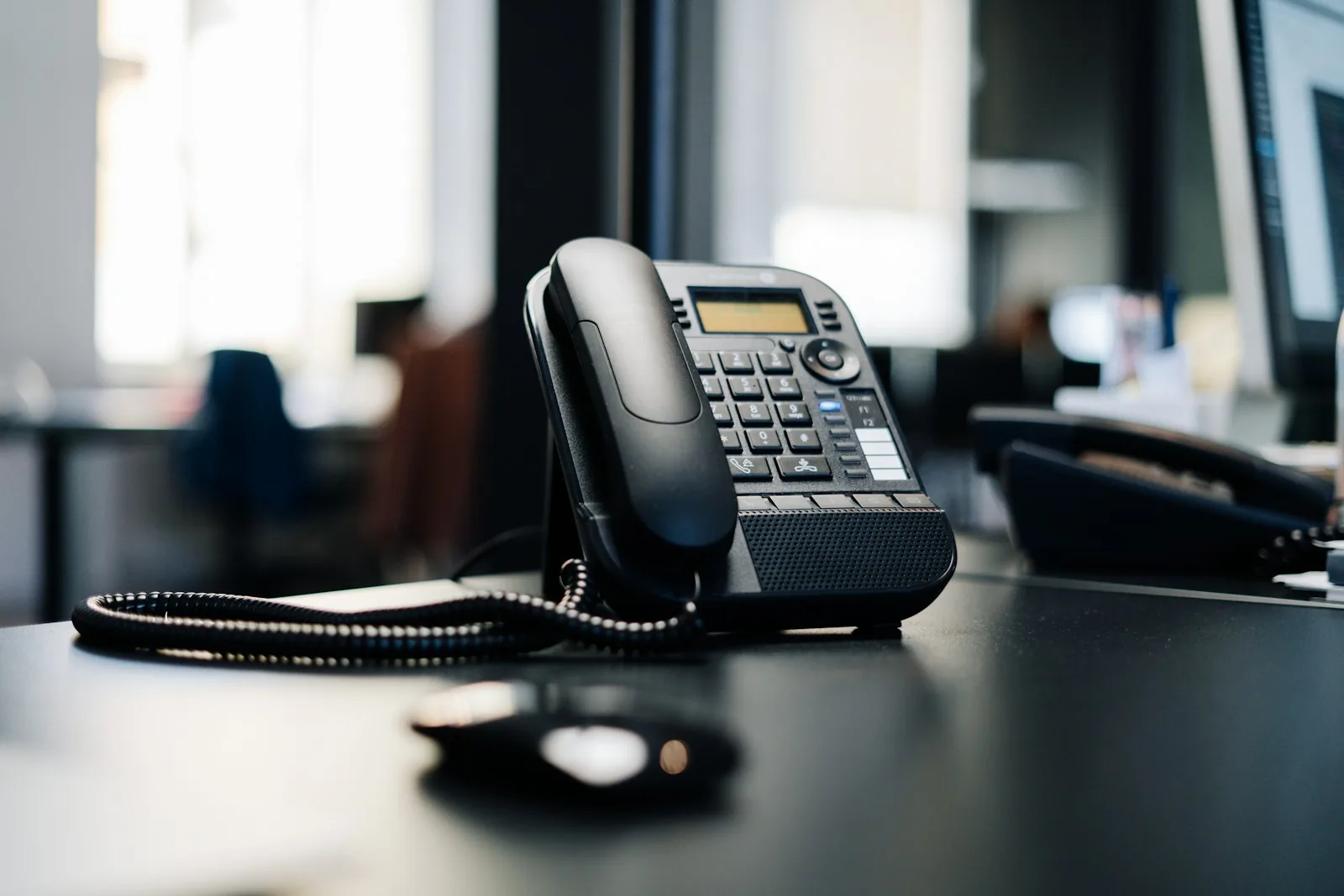
A man rear-ended on the Katy Freeway calls the first Google Screened law firm he sees at 11:40 on a Tuesday morning. Your receptionist is walking a client to the conference room, the second line is busy, and the call rolls to a greeting he listens to for half a minute before he hangs up and taps the next listing. In Texas, as in other Local Services Ads markets, that call used to cost your firm nothing. Under the rule Google set for October 1, 2026, it can be a paid lead.
This is not a staffing failure you invented. Google changed the billing rule. A notice titled "Upcoming changes to lead charge policy" reached Local Services Ads advertisers on August 24, 2026, according to PPC Land. The notice said missed calls during business hours would be charged as valid leads when the caller stays on the line for more than 20 seconds, as Search Engine Roundtable reported on August 25, 2026. The change landed on a profession that already struggles to pick up the phone, and on a Texas market where advertisements not exempt under Rule 7.05 carry a 10-day filing clock.
The fix is not complicated, but it has to be deliberate. This article covers what Google changed and what it left undefined, six ways the rule leaks money out of law firm intake, how it lands in Texas, Florida, California and New York, how phone menus and business hours now set your bill, the arithmetic of a missed legal lead, and the four numbers that show whether your firm has closed the gap.
What Google Changed in Local Services Ads Billing on October 1, 2026
Under the rule Google set for October 1, 2026, Local Services Ads advertisers can be charged for missed calls placed during business hours when the caller stays on the line for more than 20 seconds. Before that date, a missed call with no voicemail became a charge only if your firm returned it and spoke with the caller or left a voicemail. Google's notice names no category or geographic limit, so law firms running Local Services Ads should plan as if the rule applies to them; it turns an unanswered phone into a lost opportunity you pay for.
The rule, in Google's own words
The notice said Google is "updating how and when you are charged for call leads originating from Local Services Ads." According to PPC Land's September 25, 2026 analysis, Google already counted answered calls, voicemails left by callers, and missed calls the business returned and either spoke with the customer or left a voicemail, as valid leads. The new rule adds the business-hours miss itself, once the caller has waited past 20 seconds, whether or not anyone calls back.
Charges also extend to qualifying follow-up calls. Google's Ads Liaison, Ginny Marvin, clarified on August 26, 2026 that an advertiser is charged once for follow-up calls made to the same person within 15 days of the initial interaction. The missed-call charge covers only calls placed during business hours.
Pay per lead, in a new platform
Local Services Ads bill per lead rather than per click, so the definition of a lead decides the bill. Consultwebs, a legal marketing firm, noted on August 24, 2026 that LSAs keep the pay-per-lead model as Google moves accounts into Google Ads, a migration that began in August 2026 and runs through 2027, with each law firm getting two weeks' notice before its account moves.
What Google left undefined
The notice does not define "business hours" or say whether the 20-second timer starts at the first ring or at connection. PPC Land also noted that Google has not explained how voicemail greetings interact with the timer, how missed-call disputes will work, or how the promised safeguards against robot calls and spam decide what is spam. Those gaps matter for law firms, because legal lines take a steady share of vendor pitches, wrong numbers and free-advice seekers.
One mechanism is defined. When a phone system asks callers to press a key, the timer starts only after the key press, and a caller who never presses a key is not charged. That sentence makes your phone tree part of your ad budget.
What the change means for a Texas law firm
A Texas law firm running Local Services Ads now pays for its receptionist's busiest five minutes. Every injury, family or criminal defense call in Dallas, Houston or Austin that rings out past 20 seconds during business hours, which most likely means the hours your profile shows as open, can be billed.
Six Ways the Missed-Call Charge Leaks Money From a Law Firm
The missed-call charge costs law firms money in six places: peak-hour coverage, the voicemail greeting, the callback, junk calls, the lunch hour and the reporting gap between Google and your case management system. Each one is mechanical, and each can be measured.
1. The front desk answers fewer calls than you think
Many firms overestimate their answer rate because nobody counts calls that ring out. A secret shopper study in Clio's 2024 Legal Trends Report found that only 40 percent of law firms answered phone calls, down from 56 percent in 2019, as ABA Law Practice magazine reported in March 2025. A firm near that rate has more than half of its business-hours LSA calls exposed to a charge without a conversation.
2. The voicemail greeting runs the clock
A long voicemail greeting is now a likely expense. A caller who sits through a 25-second greeting about office hours and an instruction to email has spent more than 20 seconds on the line before the beep. Under the old rule, hanging up without a message cost nothing. Google has not said how greetings are treated now, so the safe assumption is that the clock runs while the greeting plays.
3. The callback no longer rescues the charge
Calling a missed lead back is still right, but it no longer decides whether you pay. Before October 1, a missed call with no voicemail became billable only when the firm returned it and spoke with the caller or left a voicemail, according to PPC Land's reading of Google's lead rules, so a firm that never called back paid nothing for it. Now the miss is billed on its own, and a failed callback does not undo it. The economics shift from "call back when you can" to "answer the first time."
Under the October 1, 2026 rule, an unanswered Local Services Ads call is no longer free. If the caller waits more than 20 seconds during your listed business hours, Google can bill the miss as a lead, and your firm pays whether or not anyone ever speaks to that person.
4. Junk calls are harder to dispute when you miss them
Legal LSA lines receive calls that are not cases: vendors, existing clients on the wrong line, people seeking free advice in practice areas you do not handle. Google says new spam safeguards exist, but PPC Land reported that the mechanism, threshold and appeal route were not specified. A firm that answers can screen those calls quickly, log them and dispute them. A firm that misses them has no conversation to point to.
5. The lunch hour and the court calendar collide
Small firms lose the phone when attorneys are in court and staff take lunch, and those are business hours by any definition. In a two-attorney practice, a morning docket and a noon lunch break can leave the phone uncovered for two hours the profile shows as open. Every caller who waits past 20 seconds in that window is a potential charge.
6. The charge shows up in Google, the loss shows up nowhere
Google reports a charged lead; your case management system records nothing, because no intake was opened. Unless the firm reconciles the LSA lead list against Clio, MyCase, Filevine or its intake tool, missed-call charges become a quiet line of spend that never connects to a matter. Firms that cannot see the gap cannot price it.
How the Missed-Call Charge Plays Out in Texas, Florida, California and New York
Google's rule is the same in every state, but what a firm can do about it depends on the state's rules for advertising, records and contact with prospective clients. Texas firms face a filing clock on new ads, Florida firms a pre-filing requirement and fee, California firms a one-year retention duty, and New York firms rules that changed on June 1, 2026.
Texas: Dallas, Houston and Austin firms
Returning a missed LSA call is unlikely to be treated as solicitation in Texas, because the comments to the Texas rules describe a response to a request for information as something other than solicitation; confirm with ethics counsel for your own situation. Comment 2 to Rule 7.03 of the Texas Disciplinary Rules of Professional Conduct says a communication is not a solicitation if it is "made in response to a request for information, including an electronic search for information," as the Texas Center for Legal Ethics publishes the rule. The Texas constraint is speed, because Google bills the miss before the callback happens.
The constraint that does bite is filing. Under Texas Rule 7.04, a lawyer must file a copy of an advertisement, an application and a fee with the State Bar of Texas no later than 10 days after the date of dissemination, unless exempt under Rule 7.05, according to the Texas Center for Legal Ethics text of Rule 7.04. The State Bar's Advertising Review Department reviewed 2,860 submissions in the 2024 to 2025 bar year, according to the Texas Bar Journal's December 2025 report. A Dallas firm that answers the October 1 change with a rewritten LSA profile, a new intake landing page or a new Spanish-language greeting should ask ethics counsel which pieces must go to the Advertising Review Committee, and calendar the 10-day window.
Texas firms also need precise business hours. A firm with offices in Austin and El Paso works across two time zones, because El Paso and Hudspeth counties observe Mountain time while the rest of Texas runs on Central. Google does not define business hours, so the hours each office publishes are the safest reading of when misses can be billed. Firms weighing where Texas demand comes from can start with our Texas market overview.
| State | Advertising regulator | Rule that matters for an intake fix | What to do before changing ads or greetings |
|---|---|---|---|
| Texas | State Bar of Texas Advertising Review Committee | Rule 7.04: file each advertisement no later than 10 days after the date of dissemination, unless exempt under Rule 7.05 | Calendar the 10-day window for any new LSA copy, landing page or recorded message that counts as an advertisement |
| Florida | The Florida Bar | Rule 4-7.19: file each advertisement at least 20 days before first dissemination; $250 if timely, $750 if late (Florida Bar filing coversheet, July 2026) | File new ad copy before it runs, so a rushed fix does not carry the late fee |
| California | The State Bar of California | Business and Professions Code 6159.1: keep a true and correct copy of any advertisement for one year | Archive every version of the LSA profile, landing page and greeting script with dates |
| New York | Appellate Division of the New York State Supreme Court (Rules of Professional Conduct) | Article 7 rules changed June 1, 2026; live person-to-person solicitation for pecuniary gain is still prohibited | Review intake scripts against the new rules and keep callbacks tied to the caller's own request |
Florida, California and New York
Florida firms have the least room to improvise, because The Florida Bar requires advertisements to be filed before they run. Rule 4-7.19 requires a copy of each advertisement "at least 20 days prior to the lawyer's first dissemination," a requirement the Florida Supreme Court kept when it moved filing online in its September 9, 2021 opinion. The court's May 15, 2025 opinion amending Rules 4-7.19 and 4-7.20 let the Bar set and adjust the filing fee, and the Bar's July 2026 filing coversheets list $250 for an advertisement filed at least 20 days before first use and $750 for a late filing. A Miami or Tampa firm answering the missed-call charge with new LSA copy should start three weeks ahead.
California firms carry a record-keeping duty that helps when a missed-call charge is disputed. Business and Professions Code section 6159.1 says a true and correct copy of any advertisement soliciting employment of legal services "shall be retained for one year" by whoever pays for it, according to the California Legislative Information text. A Los Angeles or San Diego firm that archives each version of its LSA profile and hours also builds the record that shows which hours were published when a disputed miss occurred.
New York firms are working under advertising rules that changed four months before Google's billing change. The Appellate Division's changes to Article 7 of the Rules of Professional Conduct took effect June 1, 2026, as the New York State Bar Association reported on September 1, 2026, eliminating the separate 30-day or 15-day blackout for personal injury and wrongful death solicitations and the requirement to label communications "attorney advertising," according to a New York State Bar Association summary of September 8, 2026. Live person-to-person solicitation for pecuniary gain is still prohibited. A Manhattan or Brooklyn firm rebuilding intake scripts for October 1 should check them against the June 1 rules at the same time.
How Phone Menus and Business Hours Now Set Your LSA Bill
Your phone menu and your published business hours now decide which missed calls Google can bill. Google defined the key-press rule but did not define business hours; the hours your profile publishes are the most likely reference point.
The key-press rule cuts both ways
A menu that asks callers to press a key starts Google's timer only after the key press, and a caller who never presses a key is not charged. "Press 1 if you were injured, press 2 for an existing case" separates new-case callers from everyone else before the clock starts. The cost is friction: a stressed caller in a hospital parking lot may hang up rather than listen to options. Keep any menu to one prompt and route the new-case key to a line that is always answered.
Business hours should match real coverage
The missed-call charge covers only calls placed during business hours. Many firms publish 8:00 to 6:00 because it looks responsive, while the phone is reliably covered only from 9:00 to 5:00. Those two unstaffed hours are now billable hours. Either staff the hours you publish or publish the hours you staff.
The greeting should be shorter than the timer
Any recorded message before a person picks up should finish well inside 20 seconds. Cut the firm history and directions. State the firm name, offer the one key that reaches new-case intake, and promise a callback within a stated number of minutes.
The Arithmetic of a Missed Legal Lead
A missed legal lead now costs a law firm the lead charge plus the case it never had a chance to sign, and a legal lead already costs about twice the all-industry average. Because the charge for a miss is a full lead, not a click, the waste scales with the price of the category.
Why legal leads are expensive to waste
The LocaliQ 2026 Search Advertising Benchmarks, updated June 1, 2026, put the average cost per click for attorneys and legal services at $9.87 against $5.42 for all industries, and the average cost per lead at $131.63 against $66.69. Those are search ad figures, not LSA prices, but they show the order of magnitude a legal lead sits at.
A worked example
Take a firm with 100 business-hours LSA calls a month that answers 40, the rate Clio's secret shoppers found in 2024. Suppose half of the 60 missed callers wait more than 20 seconds. Under the October 1 rule, those 30 calls become billable leads with no conversation. Lifting the live answer rate to 80 percent cuts misses to 20 and billable misses to roughly 10: 20 fewer dead charges and 40 more conversations a month on the same budget. Your percentages will differ; the direction will not.
Speed decides the callbacks you do make
Callback value drops fast. The ABA article cites a 2007 MIT Lead Response Management Study finding that the odds of contacting a lead drop 100 times when the call comes 30 minutes after the inquiry rather than within 5 minutes. Clio's 2019 study, in its October 21, 2019 release, found 39 percent of calls went to voicemail and more than half of firms did not respond to voicemails within 72 hours.
What Works Instead: Answer First, Then Measure the Miss
The firms that handle the October 1 change well answer the first call live, route new-case callers to a line that is always covered, call back misses within minutes, and reconcile every LSA lead against intake records.
Cover the peak hours with people
Live coverage during published hours is the largest lever. Stagger lunch breaks so the phone is never unattended, give one person per shift sole ownership of the new-case line, and roll unanswered calls to a second answering point after three rings rather than to voicemail. Firms too small to staff every hour can use a trained legal answering service or an attorney-supervised AI voice agent for the first call.
Supervise any AI that answers the phone
AI voice agents can cover gaps, but the attorney stays responsible for what they say. ABA Formal Opinion 512, published July 29, 2024, warns against delegating client-related decisions to AI without adequate attorney supervision, and the ABA article notes that a chatbot cannot detect conflicts of interest or credibility concerns on its own. An intake agent should collect facts, flag urgency and book the consultation, never give legal advice.
Answering the first call is now cheaper than calling back. Under the October 1 rules, a missed Local Services Ads call can be billed before your callback is dialed, so every point of live answer rate is budget you keep, not just a lead you save.
Dispute what you can prove
Disputes work best with evidence. Keep call recordings where your state's consent rules allow, log every answered LSA call with a disposition (case, not a case, spam, existing client), and check the LSA lead list weekly against those logs. Google has not published how missed-call disputes will work, so firms that can show a pattern of spam or out-of-area calls are best placed for credits once it does.
How Leadnox Approaches the Missed-Call Charge
Leadnox treats the October 1 change as an intake problem first and an ad problem second, because the cheapest LSA lead is the one your firm answers. The work covers answering coverage, account hygiene and reporting tied to signed retainers.
Close the answering gap
Leadnox starts by auditing your call logs against your published LSA hours, so you see how many business-hours calls rang out last month and when. Where staff cannot cover every hour, Leadnox builds attorney-supervised AI voice agents and instant SMS follow-up that answer at the first ring, collect the facts and the names a conflict check needs for attorney review, and route urgent matters to the on-call attorney. Scripts follow your state bar's advertising and solicitation rules and are approved by your firm before going live.
Keep the LSA account clean
Leadnox reviews your Local Services Ads call logs every week and disputes unqualified charges with Google, the same discipline the law firm marketing program applies to Google Screened accounts. The review now covers business-hours settings, greeting length and whether a single-key menu would cut charges without losing real callers. LSAs and paid search run together under our performance marketing work, so budget moves to the hours and channels that produce consultations.
Report cost per signed retainer
Leadnox connects LSA and paid search leads to Clio, MyCase or Filevine, so a charged lead either becomes a matter in your system or shows up as a charge with no intake behind it. That reconciliation turns the missed-call charge into a number your managing partner sees every month, next to cost per signed retainer by channel.
What to Measure After the October 1 Change
Four numbers show whether the missed-call charge is under control: live answer rate during published hours, the share of LSA charges with no conversation, callback speed on misses, and cost per signed retainer from LSAs. Track all four monthly against September 2026, the last full month under the old rule.
Live answer rate during published business hours
Live answer rate is the share of business-hours LSA calls a person or supervised agent picks up before 20 seconds. Clio's 2024 figure of 40 percent is the floor to beat, not the target. A firm answering 80 percent or more of new-case calls live has removed most of its exposure.
Charged leads with no conversation
Charged leads with no conversation are LSA leads Google billed that never produced a recorded call or intake record. Match the LSA lead report against your intake log weekly. The number should fall month over month; if it does not, the timestamps show which hours lack coverage.
Callback time on missed calls
Callback time is the minutes between a missed call and the first attempt to reach the caller. Given the MIT finding on the 5-minute window, aim for a first callback within 5 minutes during business hours and an automated text acknowledging the call in under a minute.
Cost per signed retainer from LSAs
Cost per signed retainer is monthly LSA spend divided by retainers signed from LSA leads. It is the only number that captures both the new charges and the cases they produced. If cost per lead rose but cost per signed retainer held, the intake fixes worked.
Frequently Asked Questions
Yes, under the rule Google set for October 1, 2026, Texas law firms can be charged for missed Local Services Ads calls placed during business hours when the caller stays on the line for more than 20 seconds. Google's notice states no geographic limit. Callers who never press a key on a phone menu are not charged. Comment 2 to Texas Rule 7.03 treats a response to a request for information as something other than solicitation.
Google has not said whether the 20-second timer starts at the first ring or at connection. Its notice defines one case: when a phone system asks callers to press a key, the timer starts after the key press, and a caller who never presses a key is not charged. Keep any recorded greeting well under 20 seconds so the caller reaches a person or a menu choice first.
Google has not said directly. Its Ads Liaison clarified in August 2026 that an advertiser is charged only once for follow-up calls made to the same person within 15 days of the initial interaction, under the rule for calls whose first contact did not qualify as a charged lead. The missed call itself can be billed if the caller waited more than 20 seconds during business hours.
An AI voice agent can take Local Services Ads calls, but ethics guidance puts the responsibility on the attorney to supervise it. ABA Formal Opinion 512, issued July 29, 2024, warns against handing client-related decisions to AI without adequate supervision. Use the agent to collect facts, flag urgent matters and book consultations, and have a person review conflicts, case acceptance and anything resembling legal advice before the firm commits.
About 40 percent, according to the secret shopper study in Clio's 2024 Legal Trends Report, down from 56 percent in 2019. Most firms miss more calls than they answer. Under Google's October 2026 billing rule, each of those misses can become a paid Local Services Ads lead when the caller waits more than 20 seconds during business hours, so answer rate is now a direct ad cost.
Stop Paying Google for Calls Your Texas Firm Never Answered
We audit your Local Services Ads call logs against your published hours, close the answering gaps with supervised intake, and report cost per signed retainer for Texas, Florida, California and New York firms.